FertiJoy IVF & Fertility
Building families beyond borders
Fertility Surgery in Women
Home / IVF & Fertility Treatments / Fertility Surgery in Women
Fertility Surgery in Women
Fertility surgery in women is a key option when there are physical problems stopping natural conception. Many women face issues like blocked fallopian tubes, fibroids, endometriosis, polyps, or scar tissue inside the uterus. These conditions can make it hard for eggs and sperm to meet or for an embryo to implant properly.
Fertility surgery helps fix these problems in a gentle way. It often uses small cuts and special tools, so recovery is quick and pain is less. Doctors choose surgery when tests show a clear structural issue that medicines or simple treatments cannot solve. The goal is to improve the chances of getting pregnant naturally or to make treatments like IVF work better.
Common Types of Fertility Surgery in Women
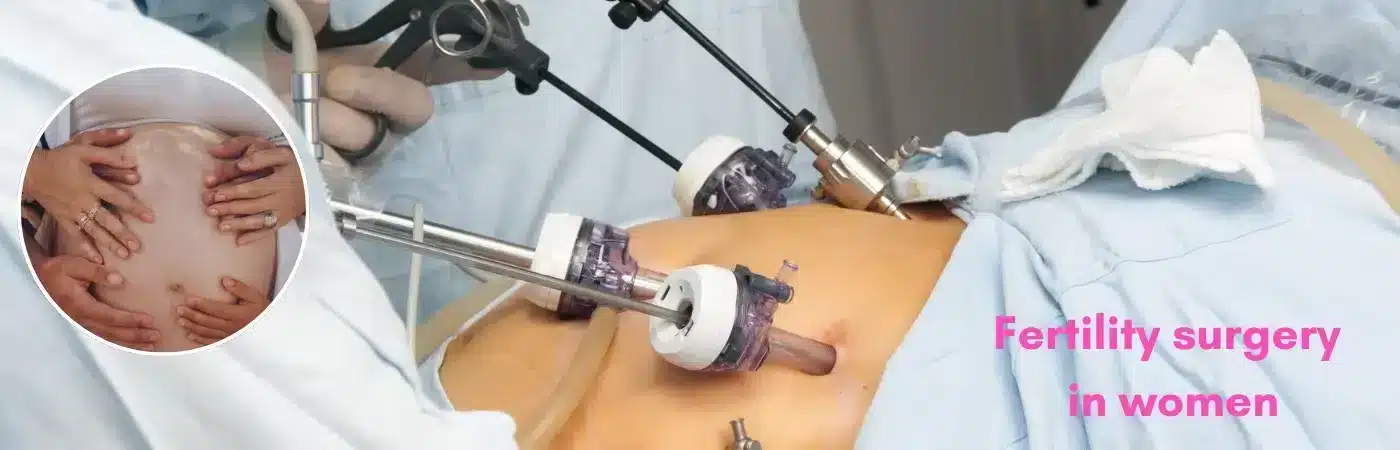
Doctors perform most fertility surgeries in two main ways:hysteroscopy and laparoscopy. Both are minimally invasive.
Hysteroscopy: The doctor puts a thin, lighted tube through the vagina and cervix into the uterus. No cuts on the belly are needed. This lets the doctor see inside the uterus clearly. They can remove polyps (small growths), fibroids (non-cancerous lumps), or scar tissue (called Asherman’s syndrome). They can also fix a uterine septum (a wall inside the uterus present from birth). Hysteroscopy is quick, often done as a day-care procedure, and helps improve implantation chances.
Laparoscopy: This is also called keyhole surgery. The doctor makes one or two tiny cuts near the belly button and inserts a small camera and tools. The belly is gently filled with gas to create space for viewing. Laparoscopy is useful for checking and treating problems outside the uterus, such as:
Endometriosis (tissue like the uterine lining growing outside the uterus)
Ovarian cysts
Adhesions (scar tissue sticking organs together)
Blocked or damaged fallopian tubes
Fibroids on the outer side of the uterus
In many cases, the doctor can treat the problem during the same procedure.
Other surgeries include myomectomy (removal of fibroids while keeping the uterus) and tubal surgery to open blocked tubes or remove hydrosalpinx (fluid-filled tubes that can harm embryos). For women who had tubal ligation earlier, reversal surgery is sometimes possible, though success depends on age and tube condition.
When is Fertility Surgery Needed?
Surgery is recommended if:
Tests like HSG (hysterosalpingogram) show blocked tubes
Ultrasound or MRI detects fibroids or polyps affecting the uterus
Endometriosis causes pain and infertility
There is unexplained infertility but suspicion of hidden issues
Previous IVF cycles failed due to uterine problems
Surgery is not the first step for everyone. Doctors usually start with blood tests, ultrasound, and semen analysis for the partner. If a fixable problem is found, surgery can be a good choice before moving to more advanced treatments.
Benefits of Fertility Surgery
It can restore natural fertility in many cases
Improves success rates of IUI or IVF if surgery is done first
Reduces pain from conditions like endometriosis
Short hospital stay and fast recovery (often back to normal in a few days to a week)
Preserves the uterus and ovaries for future pregnancies
Many women conceive naturally within months after successful surgery.
Risks and Things to Know
Like any surgery, there are small risks such as infection, bleeding, or reaction to anesthesia. With laparoscopy and hysteroscopy, these risks are very low because the cuts are tiny. Your doctor will discuss your personal risks based on age, health, and the type of surgery.
Recovery is usually smooth. You may feel mild pain or shoulder discomfort (from the gas used in laparoscopy) for a day or two. Most women return to light work within 2-3 days and avoid heavy lifting for a short time.
It is important to choose an experienced fertility surgeon. Success depends on the doctor’s skill and the clinic’s facilities.
Why Choose Dr. Ramya Mishra for Fertility Surgery
Dr. Ramya Mishra is a senior fertility specialist with many years of experience in handling complex infertility cases. She uses simple and clear language while explaining every step to her patients. Her caring approach helps women feel comfortable and confident.
At Fertijoy-Best Fertility Clinic in Delhi NCR, Dr. Ramya Mishra offers advanced yet affordable fertility care. The clinic has modern operation theatres for hysteroscopy and laparoscopy. They focus on personalized treatment plans after proper testing.
The team at Fertijoy believes in ethical and transparent care. They guide you from the first consultation to post-surgery follow-up. Many couples have found success here because of the combination of medical skill and emotional support.
If you have been trying to conceive for more than a year (or six months if you are over 35), it is wise to get tested. Fertility surgery might be the missing piece that helps you on your journey to parenthood.
Final Thoughts
Fertility surgery in women is safe, effective, and often life-changing when done for the right reasons. It corrects problems that block the path to pregnancy and gives hope to many couples. Always consult a qualified fertility expert who can explain options in easy words and create a plan suited to your body and dreams.
If you or your partner are facing infertility challenges, reach out to a trusted clinic. With the right guidance and timely treatment, the joy of holding your baby can become real.
IVF & Fertility Treatments
- Ovulation Induction
- IVF – In-Vitro Fertilisation
- IUI – Intrauterine Insemination
- ICSI / PICSI Treatment
- Surgical Sperm Retrieval
- Laser Assisted Hatching
- Embryo Cryopreservation
- Fertility Surgery in Women
- Centrifugation-Free Microfluidic Sperm Selection
- Elective Egg Freezing
- Medical Egg Freezing
- Time-Lapse Culture System